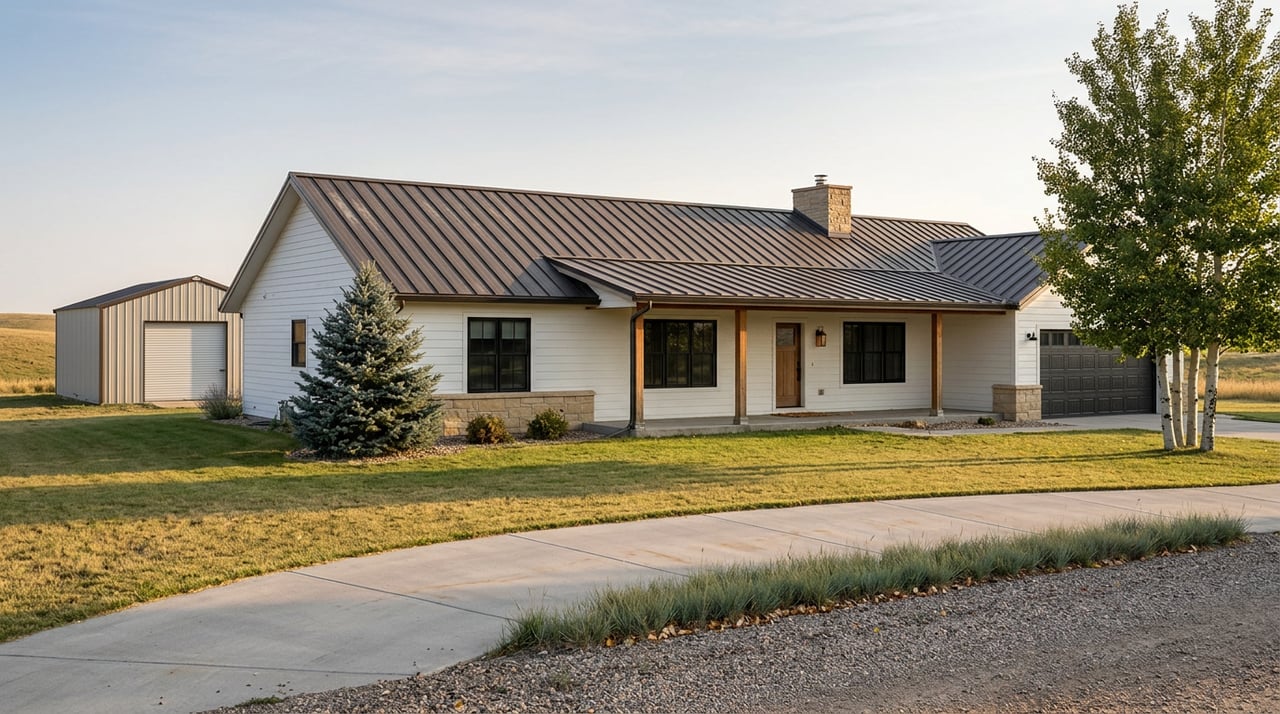
The Rocket Miner reported that on November 18, 2025, the Rock Springs City Council approved something most councils never have to vote on: permission to tear down a house because of what was happening underneath it. The property at 506 A Street had a basement with what Mayor Max Mickelson described plainly at the meeting. "According to AML, the basement has a huge sinkhole in it," he said, adding that the city had spent three years working through the legal issues just to get to the point of filling the void before it damaged the homes next door.
Three years. For one house. That timeline highlights a practical consideration for Rock Springs transactions: ground stability can affect a property's risk profile and closing process.
The practical next step is to check a property's subsidence history and ask early about coverage requirements, valuation, and escrow.
A City Built Over 450 Feet of Empty Rooms
Coal mining started in Rock Springs in 1868 during construction of the transcontinental railroad and ran continuously until the 1950s. The method used was room-and-pillar mining, where crews carved out open chambers and left coal pillars standing to hold up the ceiling. Over the following decades, a meaningful share of the city ended up sitting directly above those voids, in some places as deep as 450 feet down.
When the wooden props and coal pillars in those old rooms eventually gave way, the empty space didn't stay empty. Rubble and voids migrated upward until the surface itself started to sink or collapse, which is the mechanism behind every subsidence event the city has dealt with since.
This isn't confined to one neighborhood or one decade. Streets and areas with documented subsidence history include the Tree Streets neighborhood and Adams Street, Dewar Drive, the Plaza Mall parking lot, the A Street viaduct area, Skyline Village, the downtown core, Ridge Avenue, Blairtown, Wendt Street, McTee Street, Stagecoach Boulevard, and the El Rancho mobile home park near 9th Street. Read that list again. It spans the historic core and newer residential pockets, single-family blocks and mobile home communities, downtown commercial property and quiet side streets. This is not a niche risk attached to a handful of century-old houses. It is a condition tied to where the mines ran, not to how old the house on top of them happens to be.
What Standard Homeowners Policies May Not Cover
Here's the part that catches people off guard at the worst possible time: the Wyoming Department of Environmental Quality says standard homeowners insurance typically does not cover mine subsidence damage. It's excluded. If you're buying in Rock Springs and assuming your regular policy has you covered, it probably doesn't.
Wyoming's 1986 General Session established the Wyoming Mine Subsidence Insurance Program, which is run through the Department of Environmental Quality's Abandoned Mine Land Division. Many mortgage companies require it for properties in identified risk areas, which means it can surface as a lender condition late in your loan process rather than something you thought to ask about at the offer stage.
The good news is that it's inexpensive relative to what it protects. Current rates work out to roughly this:
| Coverage Amount | Residential Annual Premium (at $2/$1,000) |
|---|---|
| $100,000 | $200 |
| $200,000 | $400 |
| $275,000 (program maximum) | $550 |
Commercial structures run $3 per $1,000 of coverage annually. The program caps coverage at $275,000 per structure, and rules require insuring at least 75 percent of a structure's estimated value without exceeding 100 percent of it. That value can be established by the county tax assessor, a licensed appraiser, or a market analysis from a licensed real estate agent, which is worth knowing if you're trying to line up coverage before closing rather than scrambling after.
Why This Shows Up Late, Not Early
Mine subsidence coverage may not come up until escrow. Lenders don't always flag it until underwriting is already underway. If you're financing a purchase in one of the identified risk areas, ask your lender directly and early whether subsidence coverage will be required, rather than waiting to find out during the loan conditions review.
If you already own a policy and want the premium paid through your mortgage escrow account, you have to request that setup specifically. It doesn't happen automatically, and if you refinance or switch mortgage companies down the road, you're responsible for confirming the new escrow account is still set up to make that payment. It's a small administrative detail, but it's exactly the kind of thing that lapses quietly if nobody is tracking it.
Grouting Stabilizes the Ground. It Doesn't Erase the Question.
When AML confirms a subsidence pattern in a developed area, the usual response is drilling and grouting: injecting cement grout under low pressure into the shallow voids to reduce the odds of future collapse. This work has happened block by block across the city for decades, with past projects concentrated in areas like Canyon View Estates and the Ahsay Park and Miller and Tisdel Street corridor, alongside investigative drilling focused on the old No. 1 and No. 7 coal seams that run under much of the city.
Grouting is real mitigation, not a formality. But even the program's own guidance is direct about its limits: stabilizing the mine void reduces the risk of future subsidence, it doesn't guarantee a subsidence event won't happen again. If you're buying a home where the seller mentions prior grouting work, that's a reason for confidence, not a reason to skip the insurance conversation. The two aren't substitutes for each other.
The Town Hasn't Stopped Talking About This
This isn't a closed chapter of local history that only surfaces in old newspaper clippings. A Rock Springs resident named Stephen Shea premiered the first installment of a three-part documentary, "Coal Mining and Subsidence in Rock Springs, Wyoming," at the Broadway Theater on October 29, 2025, with segments on the Rock Springs Chinese Massacre and the Abandoned Mine Lands program still in development. The fact that a local filmmaker is building a multi-part series around this right now, decades after the mines closed, tells you the subject is still active in how residents understand their own city.
That's really the shift in thinking worth taking away here. Mine subsidence in Rock Springs is a known, well-documented, state-managed condition tied to how a large share of this city was built. If you're considering a home in a subsidence-mapped area, ask about coverage, value, and escrow setup before you're already three weeks from closing.
Quick Answers
Is mine subsidence insurance mandatory in Rock Springs? Many mortgage lenders require it for properties in areas with identified subsidence risk. Ask your lender directly during preapproval rather than after you're under contract.
Does the policy cover things like fences or detached garages, not just the house? The insured value is based on an assessor's, appraiser's, or licensed agent's estimate. Confirm exactly what's included with the AML program directly before you rely on it.
If a home already has mine subsidence insurance, what should I confirm? Confirm the coverage details with the AML program directly during your purchase process.
If you're weighing a purchase or a listing anywhere in Rock Springs and want a straight answer about what a specific address's history looks like, Forever West Land & Home is a good place to start that conversation. Let's Connect before you're staring down a lender condition you didn't see coming.
This article is general information, not legal, tax or financial advice. Consult a qualified professional about your situation.